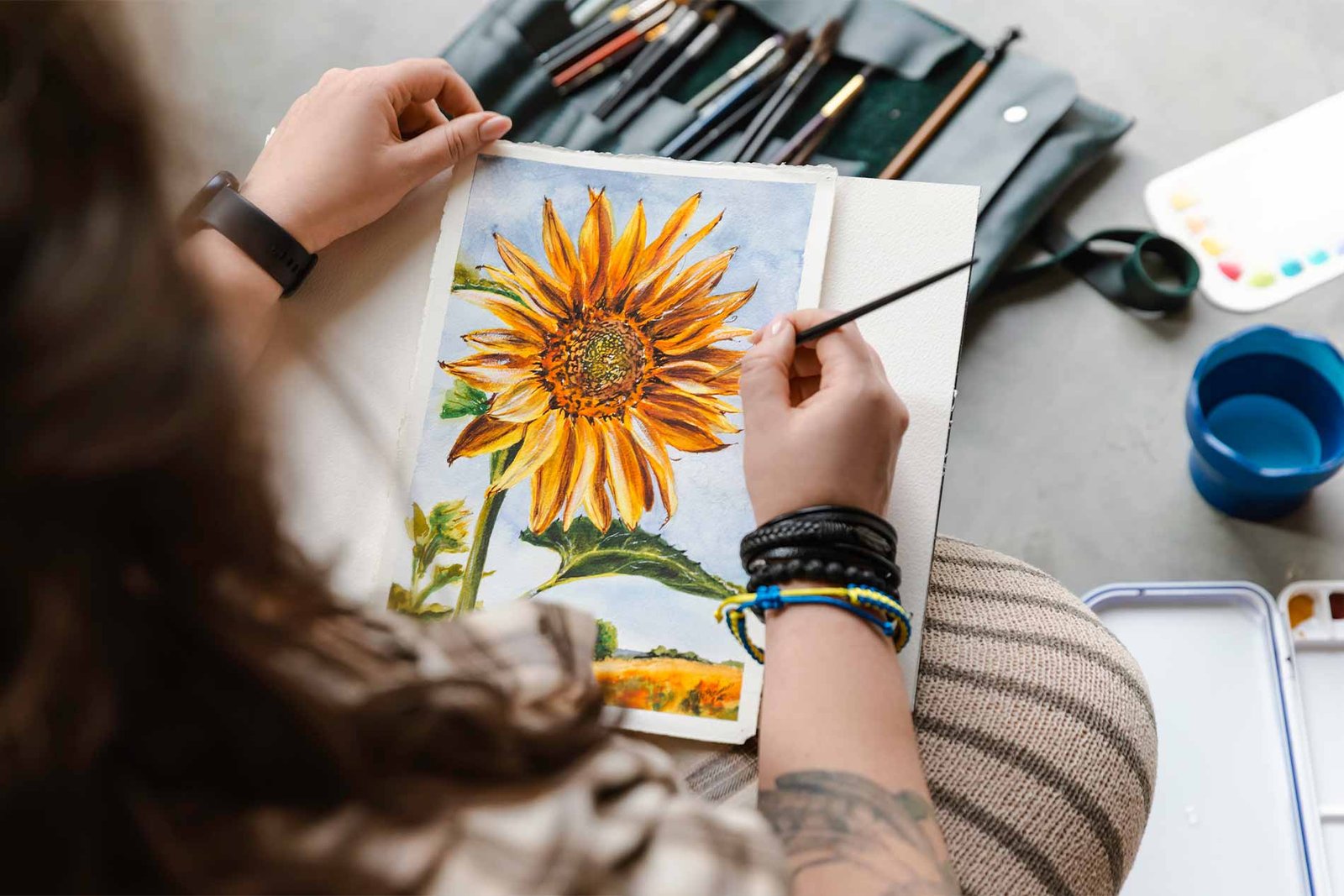
From silence to Castalia…
Castalia: An Idea for a Creative Community in Medway
There is an idea I have carried with me for several years. It has changed as I have changed. At first, I imagined it as a community I needed to find. Later, I thought perhaps it was a community I needed to create. Today I understand it differently.
I imagine Castalia as a place that could be built together. Not simply an art centre, not simply a society, and not a space designed only for professional artists. I imagine a living creative environment where people at different stages of life and practice can meet, make, learn, exchange knowledge and discover possibilities they might not encounter on their own.
I also understand something now that I understood less clearly when this idea first appeared: a place like this cannot be created by one person.
I can carry the idea. I can begin conversations around it. I can contribute my experience, energy and vision. But a genuine creative community needs many people, different skills, partnerships, resources and, most importantly, a reason to exist beyond the ambitions of its founder.
So Castalia remains an idea. But it is an idea I continue to believe in.
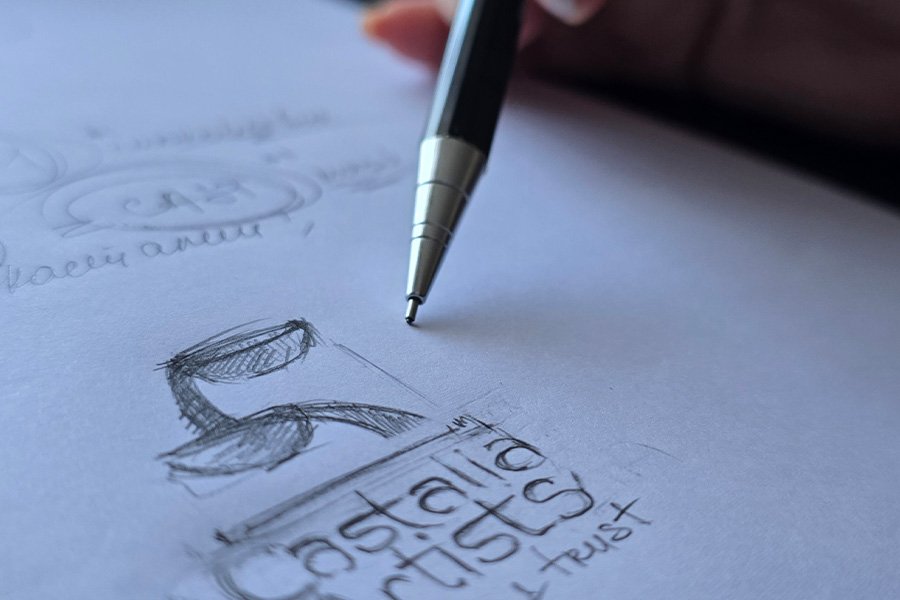
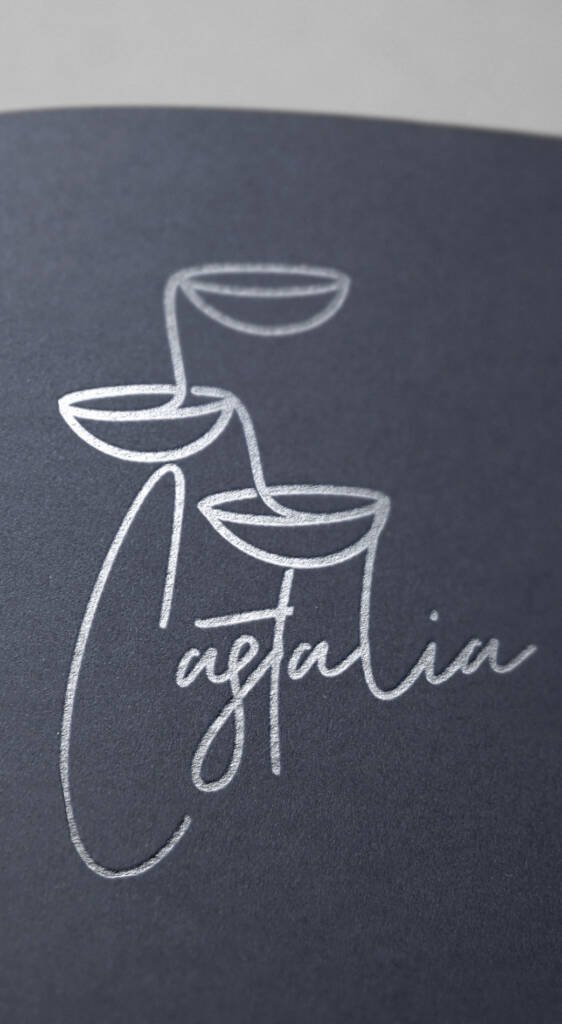
Why Castalia?
The name comes from the ancient Castalian Spring at Delphi, at the foot of Mount Parnassus in Greece.
In antiquity, its waters were connected with the sanctuary of Apollo and were used for ritual purification by those entering the sacred site. Over time, Castalia also became associated with the Muses and with poetic inspiration. In the literary imagination, to drink from the Castalian Spring came to suggest drawing from a source of creativity. This is the meaning that first drew me to the name.
I think of Castalia as an eternal source of inspiration. Not a place that tells people what to create, or even who they should become, but a place from which they can draw something and carry it into their own lives. And perhaps the image of a spring is particularly important.
A spring does not keep what comes to it. It flows. It replenishes itself through movement. Different people can approach the same water and leave with something entirely their own. That is close to what I imagine for Castalia.
A place where knowledge moves between generations. Where one person’s experience becomes another person’s beginning. Where artists, makers, thinkers and people who may not yet call themselves creative can encounter one another. Where inspiration is not treated as something possessed by a few, but as something continuously exchanged.
In that sense, Castalia is not simply the name of the place I dream of creating.
It describes what I hope the place itself might become: a living source of inspiration that continues to flow because people keep bringing something to it, and taking something new away.
Creativity does not belong to one age
Since moving to the UK and becoming part of the creative community in Medway, I have had the opportunity to meet artists and makers at very different stages of their lives. One of the communities that has taught me most is Rochester & West Kent Art Society.
When I first joined, I noticed immediately that many members were older than me. Over time, however, age became one of the least interesting things about them. What interested me was what happened when people were given regular permission to create. Some had been making art for decades. Others had returned to it after careers, families and responsibilities had occupied most of their adult lives. Some wanted to exhibit. Some wanted to improve. Some simply wanted several hours in which painting mattered.
Watching this changed something in my understanding of creative opportunity.
We often speak, quite rightly, about creating pathways for young people into the arts. Young people need access, encouragement, skills, networks and the possibility of imagining a creative future. But possibility is not only needed at the beginning of life. There are people who have spent thirty or forty years being practical. Working. Raising families. Paying mortgages. Caring for others. Meeting responsibilities. Somewhere inside all of that, a creative part of them may have remained quiet, not because it disappeared, but because there was never enough space for it.
What happens when that space finally becomes available? What might begin at 20 can also begin at 40, 60 or 75. I have become increasingly interested in communities where those lives can meet.
A place between worlds
Perhaps this is also why the idea of Castalia continues to follow me.
My own life has moved between countries, professions and identities. I had an established professional career in Ukraine before displacement required me to begin again in the UK. I became more deeply committed to my artistic practice while simultaneously learning how to belong to a new place.
That experience has made me increasingly interested in what happens between established categories.
- Between professional and emerging.
- Between artist and audience.
- Between generations.
- Between cultures.
- Between making something privately and finding the courage to bring it into the world.
My current artistic practice asks a related question: What becomes possible in the spaces between? Castalia could be one answer to that question outside the painting. Not an answer in the sense of a finished model, but a place in which those spaces could physically exist.
More than studio space
I do not imagine Castalia simply as a building containing studios. I imagine somewhere you might come to make work, but also somewhere you might encounter a person whose experience changes what you thought was possible. A young artist might meet someone with forty years of knowledge of a craft. An established artist might work alongside someone making their first serious piece. A designer might meet a poet. A painter might meet a filmmaker. A retired engineer might discover that decades of technical knowledge have unexpected value to a group of makers. Someone new to the area might begin to understand Medway through the people who have lived here all their lives. Someone deeply rooted here might encounter the place through the eyes of somebody seeing it for the first time. There could be workshops, conversations, exhibitions, mentoring, shared projects, visiting artists, experimental programmes and opportunities to learn practical skills. There should also be room for something less measurable: curiosity. The possibility of coming without already knowing what the outcome will be.
Connection without conformity
I used to think that finding the right creative community meant finding “my people”. I am less certain of that now. There is enormous comfort in meeting people who think like us, but there is also enormous creative value in meeting people who do not.
A meaningful creative space should not require everyone to share the same aesthetics, ambitions, politics, generation, background or definition of success.
It should create enough common ground for difference to become productive rather than threatening. For me, belonging does not mean becoming similar. It means having enough space to remain yourself while still being part of something larger.
Rooted in place, open to elsewhere
If Castalia ever finds a physical home, I would want it to be deeply connected to Medway. Not simply located here. Connected.
To its artists and makers. Its young people and older residents. Its universities and schools. Its cultural organisations and independent businesses. Its extraordinary heritage. Its changing communities. Its people who have lived here for generations and those who have arrived recently. At the same time, I would want the doors metaphorically open to elsewhere.
My own experience has taught me what happens when cultures, knowledge and ways of seeing travel with people. I would love Castalia to make room for those exchanges too.
Local identity does not have to mean looking inward. It can be a point from which we connect outward.
An idea that needs other people
I am deliberately not ending this article with a list of programmes Castalia is about to launch. I did that once. Today I understand the difference between having a vision and having the resources, partnerships, people, funding and infrastructure required to realise it responsibly.
I cannot build the place I am imagining alone. Nor, I think, should I. If Castalia is ever to become what I hope it might become, its shape will inevitably be changed by the people who help create it. Some of its best possibilities are probably things I cannot imagine yet.
For now, I am listening.
I am learning from the communities I am already part of. I am learning how creative organisations work. I am watching what artists need, but also what people who do not yet call themselves artists are searching for. I am interested in where generations meet, where communities remain separated, where opportunities already exist and where something is still missing.
And I continue to ask a question that has become central both to my art and to the way I think about community:
What becomes possible in the spaces between?
Perhaps one day Castalia will become one of those spaces.
Share this article :
INSPIRED POST
Building an artist career: beyond the canvas
01/04/2026
How I organised my first solo art exhibition
10/10/2025
Becoming visible: my solo art
09/23/2025
The flavour of belonging:
08/21/2025
From silence to Castalia…
08/08/2025