ALIYA
BODNAR
What becomes possible in the spaces between?
My lifelong enquiry into the quiet thresholds of human experience.
An Ongoing Enquiry
Exploring the quiet thresholdsof human experience through contemporary watercolour.
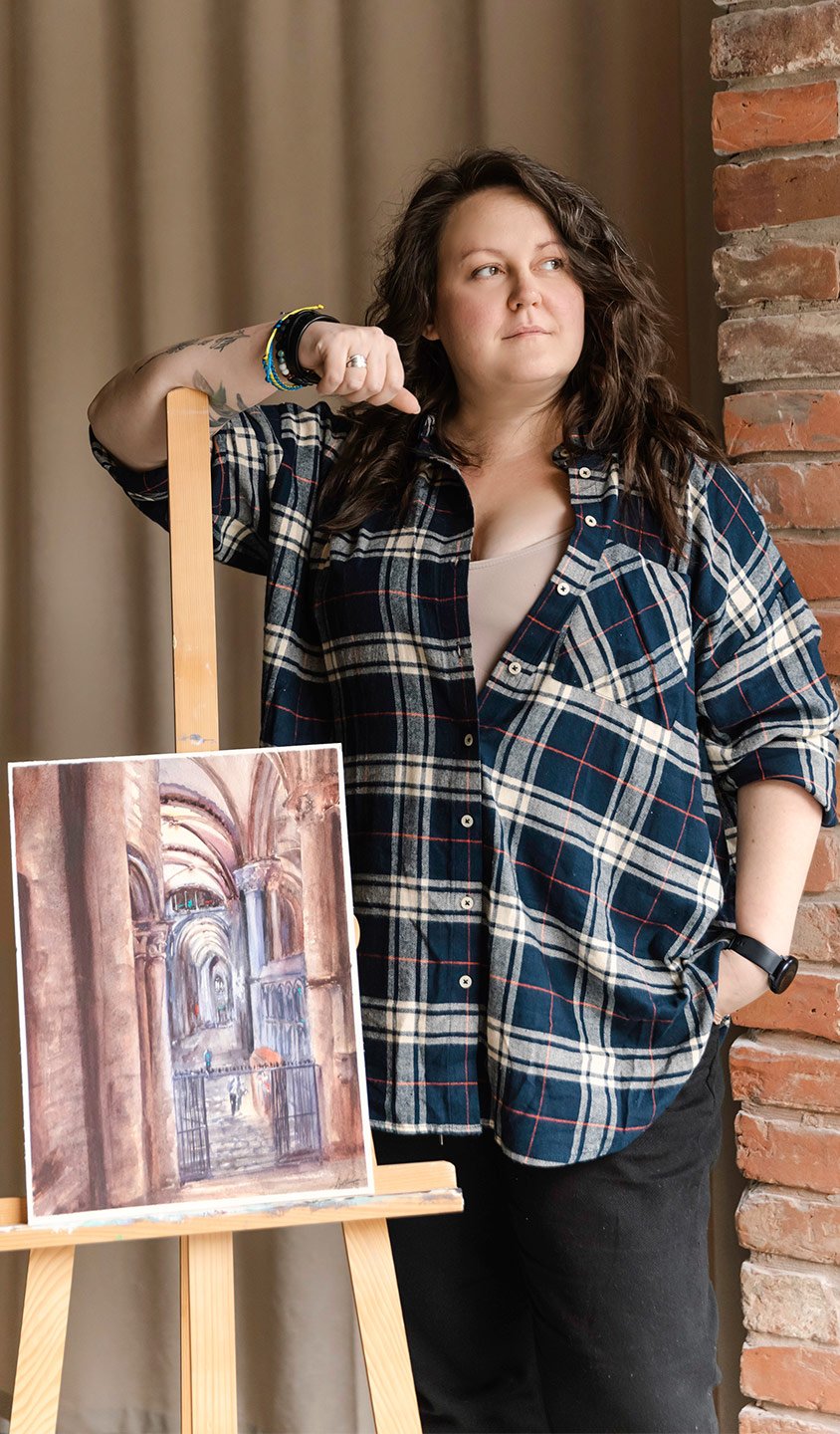
The places I paint are never really about the places themselves. A harbour, a railway station or an old street simply become where the conversation begins. They offer enough familiarity for us to enter, before quietly inviting us to look beyond what we think we already know.
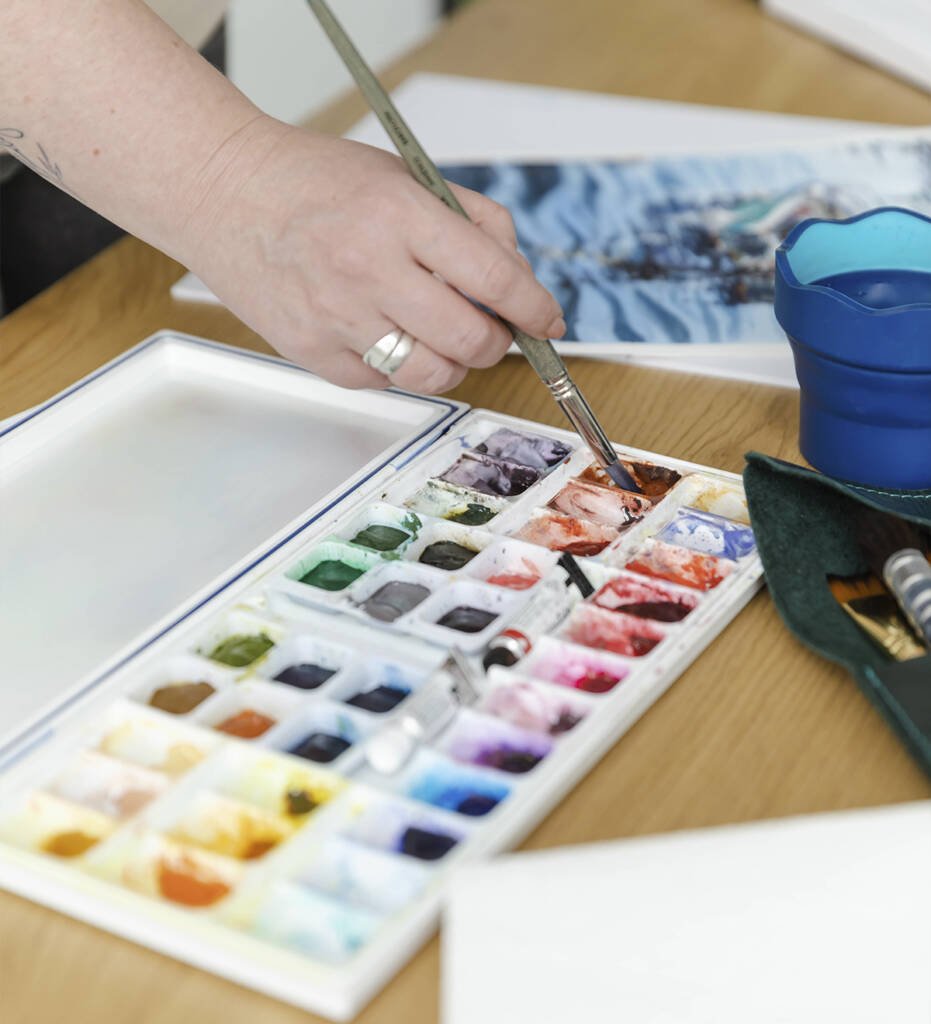
Perhaps this is why watercolour became the natural language of my practice. The medium itself exists through relationships. Water, pigment and paper never act independently; each transforms the others. What finally appears is not the victory of control, but the result of an ongoing dialogue.
I don’t hope to offer answers or fixed interpretations. If my paintings invite anything, I hope it is a slower way of looking… one that allows uncertainty to remain for a little longer. Because it is often within those quiet thresholds that another way of seeing begins to reveal itself.
Perhaps that is what I am really trying to paint. Not the place itself, but the moment when it quietly becomes something more. When memory, presence and imagination begin to overlap, and an ordinary landscape turns into a space where another way of seeing becomes possible.
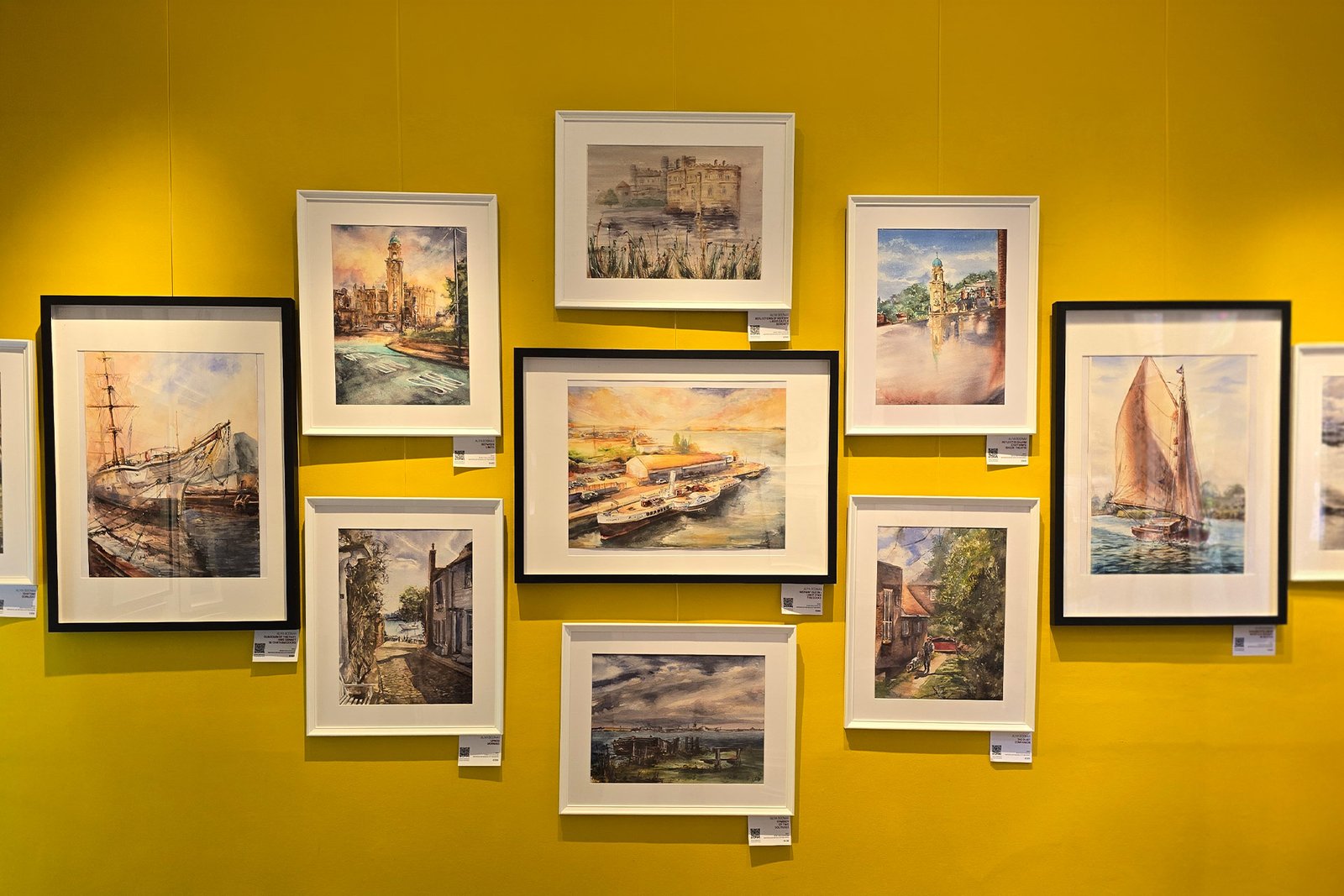
Every artistic journey begins with uncertainty, but grows through the courage to become visible.
From Fear to Visibility
Reflections after my first solo exhibition
A Language, Not a Label
Watercolour is not what defines my practice. It is the language through which I explore it.
Over the years I realised that I wasn’t drawn to watercolour simply because of its appearance. I was drawn to the way it thinks.
Water, pigment and paper never exist independently. Each responds to the others. Each changes the behaviour of the whole. Nothing emerges through isolation. Every mark is the result of a relationship.
That feels remarkably close to the way I understand the world. My paintings are not about fixed objects, but about the spaces where different realities meet. Past and present. Presence and absence. Stillness and movement. Watercolour allows these relationships to remain open rather than forcing them into certainty.
I don't see the medium as unpredictable. Quite the opposite. The more deeply I study it, the more I discover that it responds to attention, observation and understanding. Like any relationship, it asks for listening before control. Perhaps that is why watercolour became the natural language of my practice. Not because it illustrates my ideas, but because it embodies them.
Artist Statement
What becomes possible in the spaces between?
This is the question that keeps bringing me back to the studio. For a long time I thought I was painting places. Railway stations. Harbours. Historic streets. Looking back, I realise they were never the subject. They were simply where the question appeared.
A railway station is not about trains. It is the moment between staying and leaving. A harbour is not about boats. It is the quiet anticipation before movement. Twilight is not the end of the day. It is the brief space where light and darkness exist together without either trying to overcome the other.
I find myself returning to these moments because they resist certainty. They cannot be described by choosing one side over another. They ask us to remain with ambiguity long enough for something unexpected to emerge.
My paintings are not about architecture, memory or migration, although all of these inhabit them. They are about the possibility that appears when different realities meet without cancelling one another. Past and present. Absence and presence. Stillness and movement. Familiarity and change.
Watercolour allows me to work with this fragile balance. Its transparency, layered structure and sensitivity to time make it possible to build images that remain open rather than fixed. I am not interested in illustrating ideas. I am interested in creating spaces where experience can unfold.
Each series explores the same question through a different landscape. A city, a harbour, a railway platform or an empty street are never destinations. They are thresholds. I do not paint conclusions. I paint the moment when another way of seeing becomes possible.
ALIYA BODNAR
A contemporary artist working primarily in watercolour
The Questions That Keep Returning
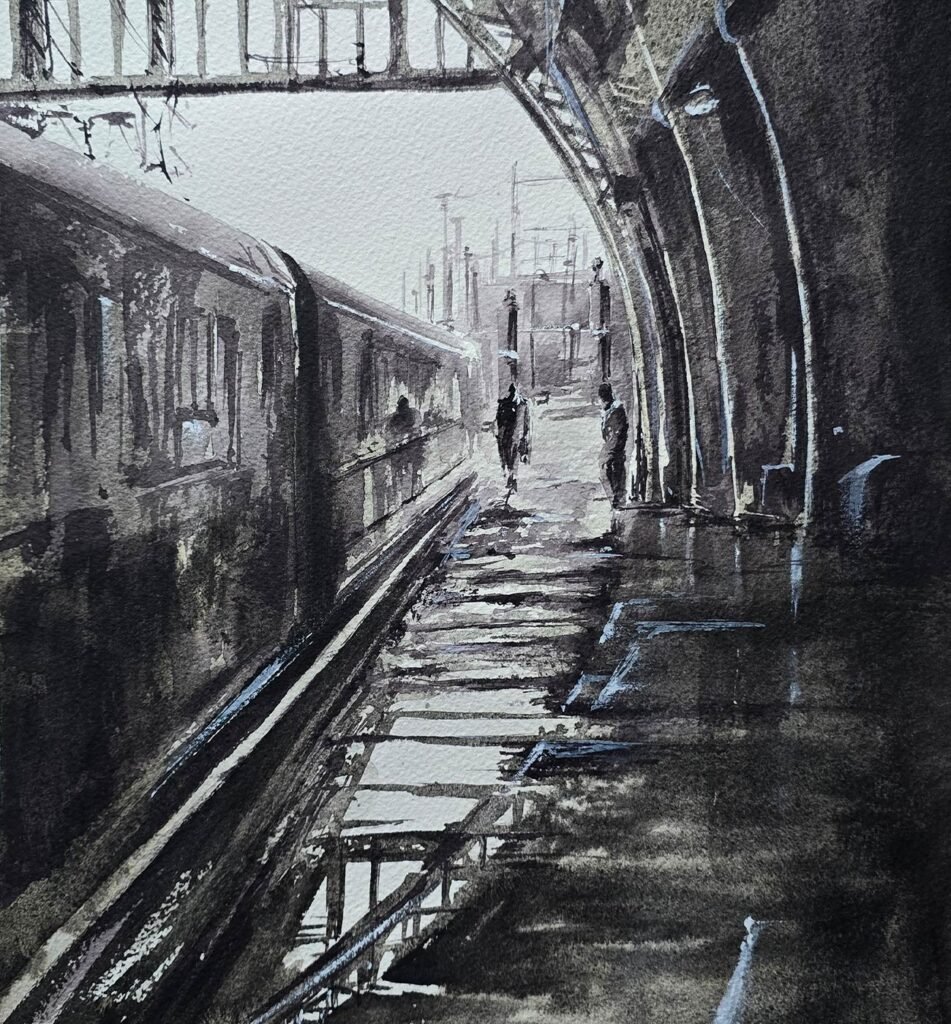
Thresholds
I keep returning to places that exist between one state and another.
Railway stations, harbours, bridges and quiet streets are never simply locations. They hold that fleeting moment when one reality begins to soften, while the next has not yet found its shape.
I am less interested in where these places are than in what becomes possible within them. They become quiet thresholds where certainty begins to loosen, without asking uncertainty to resolve itself too quickly.
I think this is why these places continue to return. They allow uncertainty to remain present a little longer. Not as something to overcome, but as a space where more than one possibility can still exist, before the next reality quietly finds its shape.
COEXISTENCE
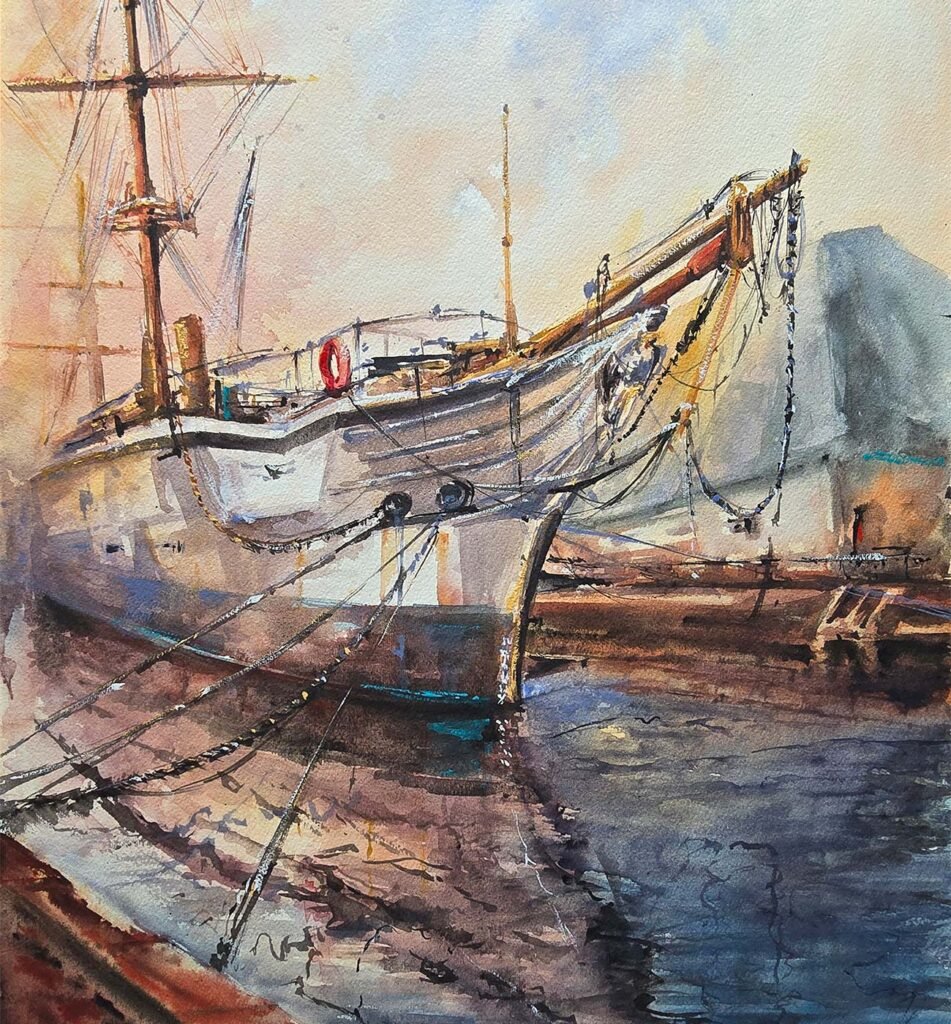
I am drawn to moments where different realities can exist together without asking one another to disappear.
Historic buildings, reflections, rivers and evening light often become the places where I find these conversations. They remind us that history does not end when something new begins. Instead, each quietly reshapes the other.
Water plays an important role throughout this body of work, but never as the subject itself. It allows different worlds to occupy the same surface. A reflection is never a copy of reality. It is another version of it, existing alongside the one we think we know.
Perhaps this is why I continue returning to these scenes. They remind me that places, like people, are rarely defined by a single moment. They are shaped by everything that continues to exist within them at once.
PRESENCE
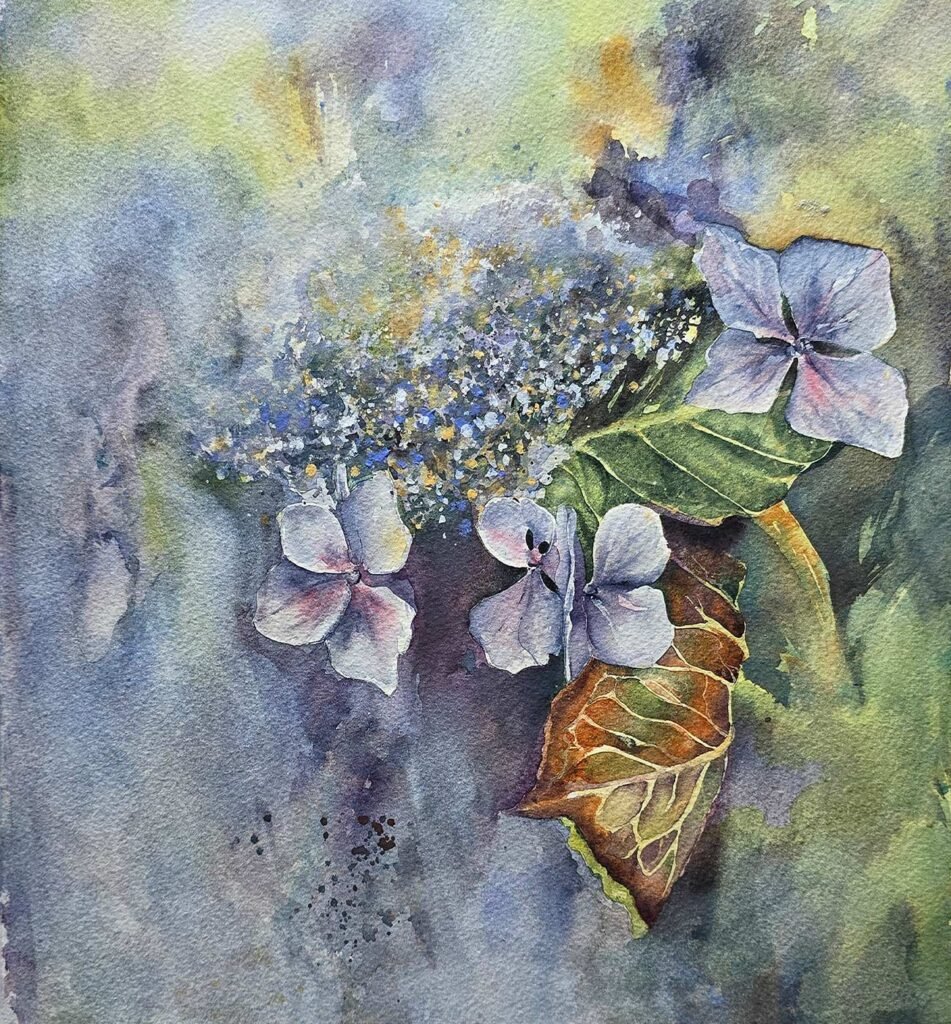
Some paintings begin not with a place, but with a feeling of simply being there.
An early morning street. A single bloom opening towards the light. The stillness before the town begins to move. Nothing extraordinary happens, yet something essential quietly reveals itself.
Perhaps this is why flowers gradually found their way into my practice. I never painted them as botanical studies. Like the landscapes I return to, they became another way of exploring presence. They ask for nothing beyond attention, reminding us how much can be discovered when we stop trying to move too quickly.
The same quiet can be found in an empty harbour, a garden after rain or a familiar street before anyone arrives. These moments are easily overlooked, yet they hold a remarkable capacity to bring us back to ourselves.
I have come to believe that presence is not the absence of movement. It is the ability to remain fully with a moment before it quietly becomes something else.
BECOMING
Some questions cannot be answered by returning to a place. They ask us to return to ourselves.
Over time, I have begun to feel that the landscapes I paint are also quiet portraits. Not of particular people, but of the inner movements we all experience as we change. Memory, migration, belonging, identity and becoming slowly begin to emerge, even when no figure appears within the painting.
Perhaps one day these questions will take human form. They may become portraits, figures or entirely new bodies of work. I do not yet know where they will lead, and I have no desire to decide too soon.
For now, I am content to let the work evolve in the same way that life does. One painting at a time. One question leading naturally to the next, allowing each series to discover what it was always trying to become.
I suspect that this chapter will never truly be finished. And perhaps that is exactly as it should be.
Themes in Practice
THRESHOLDS
COEXISTENCE
PRESENCE
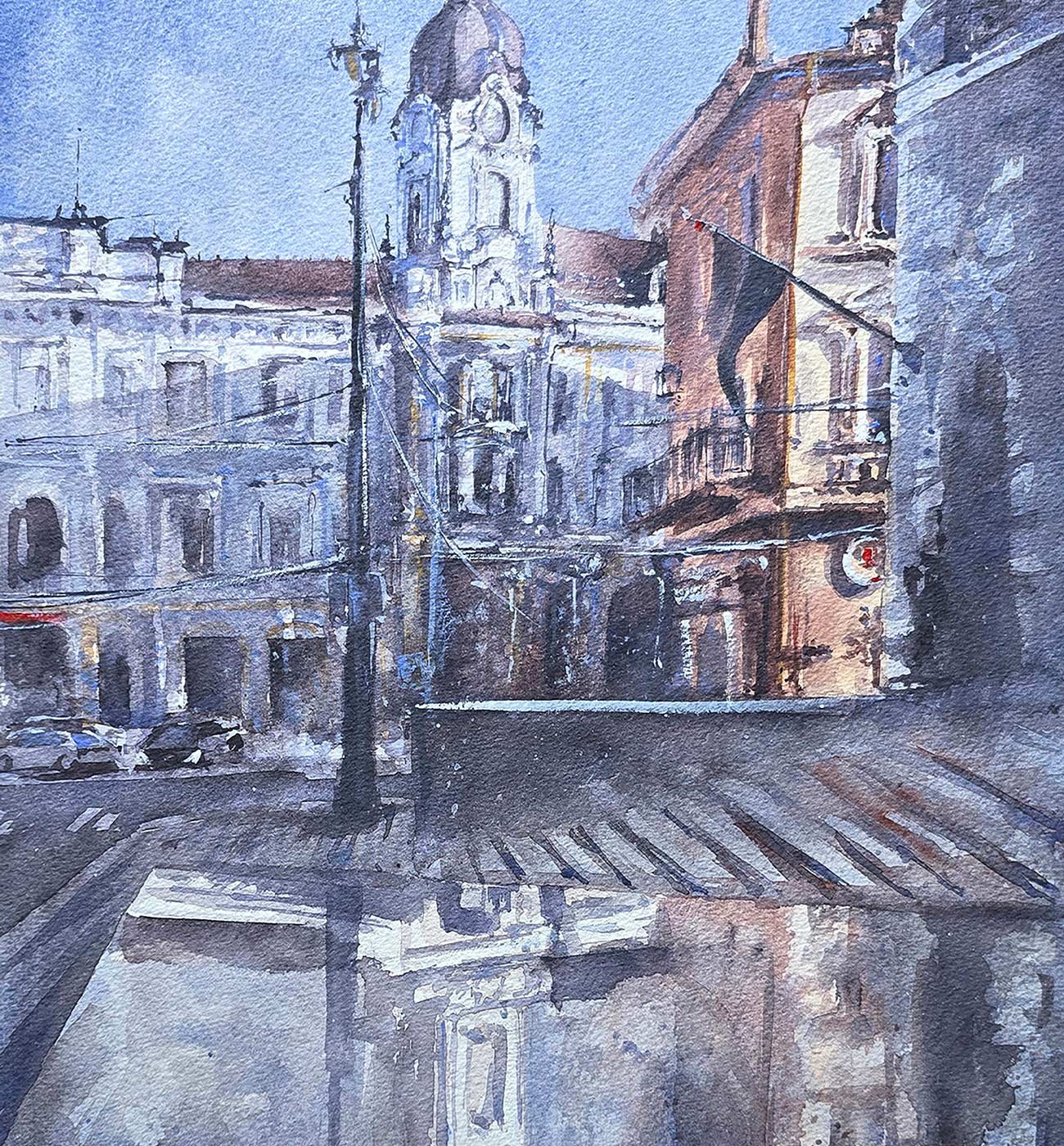
BECOMING
Moments Along the Way
Where the Work Meets the World
A quiet record of exhibitions, writing, workshops and the moments where my practice continues to meet the world.
There is something reassuring about looking back from time to time.
Not to measure progress, but to notice how one conversation leads to another, how an exhibition becomes a workshop, how writing begins alongside painting, and how each experience quietly changes the next.
Some of these moments happened in galleries. Others happened around a table, in front of an audience, or on the page. None of them feel separate from the paintings themselves. They have simply become another way that the practice continues to unfold.
Watch a Moment
`Art for Peace `Charity Art Auction aboard the Medway Queen
Reimagining my website
- A complete rethink of how my practice is presented online
July 2026
R&WKAS at Medway Open Studios `26
- Group exhibition
- Rochester, UK
July 2026
Writing as another form of practice
- I opened my Medium journal
- as a place for reflections
June 2026
Boats & Reflections: Painting Water
- A demo and workshop
- Rochester, UK
June 2026
Joining the Committee of Rochester & West Kent Art Society
- Committee member
- Nearly 100 years of artistic heritage
May 2026
R&WKAS Spring Exhibition at Royal Engineers Museum
- Group exhibition
- Gillingham, UK
March 2026
Another Medium

Some thoughts ask for silence. Others quietly ask to be spoken.
When I paint in watercolour, the questions remain open. They continue to live between water, pigment and paper.
Sometimes this is not enough.
Then I take one question and begin to unfold it. Not to arrive at an answer, but to move with it through different layers of understanding. This is how my texts gradually begin to take shape. Perhaps Medium has become the right place for them. A quiet little box of thoughts, where I slowly practise saying out loud what used to exist only inside.
Step inside →
Behind the Watercolour
People often imagine a studio as the place where paintings are made.
Mine has gradually become something a little different.
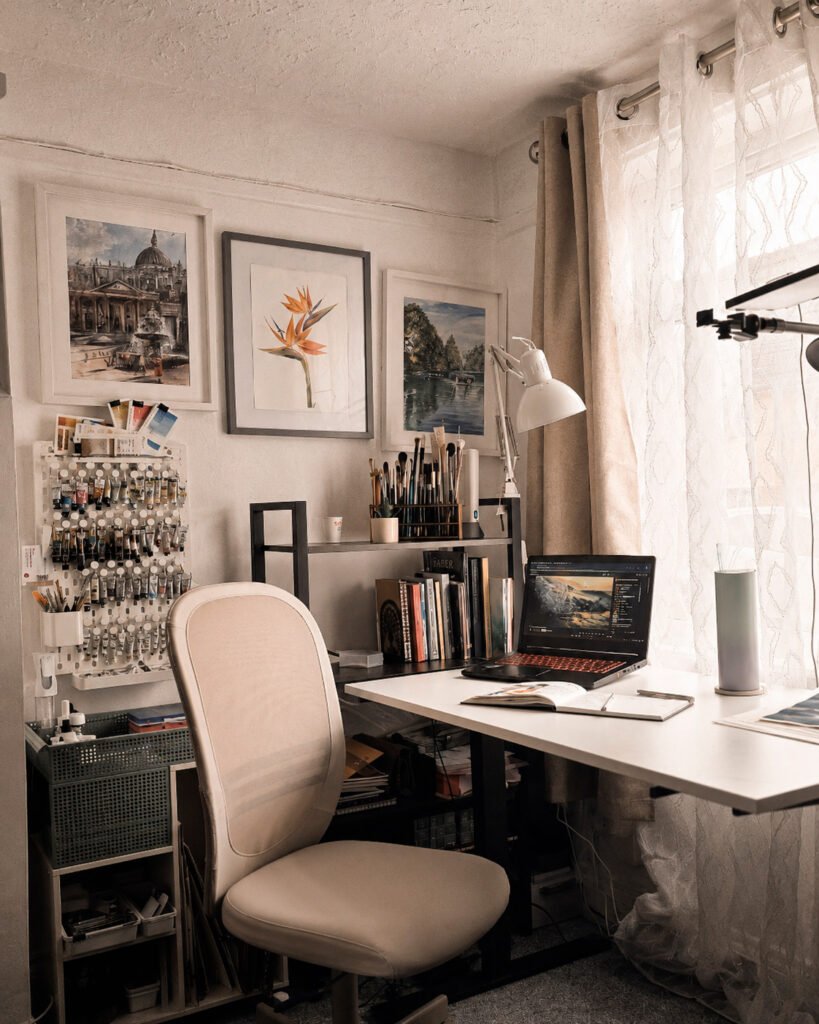
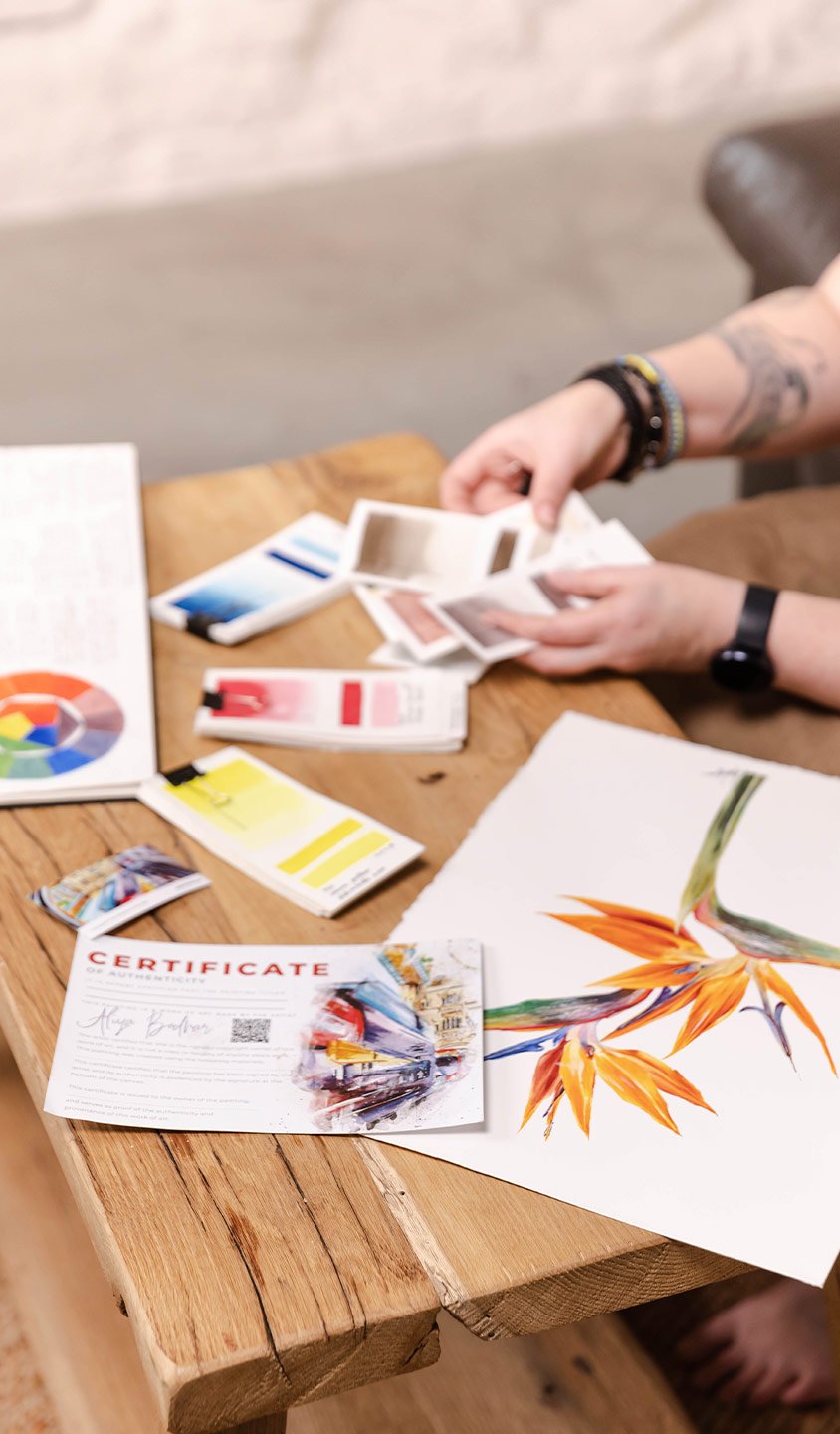
Of course, this is where I paint. But it is also where I prepare workshops, write reflections, rethink ideas, plan exhibitions, organise projects and occasionally stare at the wall until something finally begins to make sense. Everything seems to meet here. Watercolour is only one of the languages spoken in this room.
Perhaps that is why it never feels like simply a workplace. It feels more like a small world where different parts of my practice quietly continue their conversation with one another.