Building an artist career: beyond the canvas
How do you actually build a career in art?
I understand why the question appears. Making art and building a life around making art are two very different things. You can paint seriously for years without knowing how to approach an exhibition, speak to a curator, price a work, find collectors, prepare a portfolio or decide which opportunities are worth your time. The art itself may be developing beautifully while everything surrounding it still feels uncertain.
I also think we sometimes ask this question expecting there to be a sequence. First do this, then this, then this, and eventually you become a professional artist.
My experience has taught me something rather different. An artistic career is not a ladder. It is an ecosystem.
It contains the work itself, certainly, but also research, exhibitions, relationships, reputation, communication, documentation, money, experimentation, rejection, opportunities, administration and a surprising amount of logistics. Some parts grow quickly while others take years. Some opportunities that appear important lead nowhere. Something small and local can begin a relationship that matters five years later. Perhaps the most useful place to begin is not with the question, “How do I become successful?” but with a more precise one.
What kind of artistic life am I trying to build?
Taking responsibility for the life of your work
For me, an art career begins when an artist starts taking responsibility not only for making the work, but for what happens to it afterwards.
A finished painting sitting in the studio has one kind of life. The same painting placed in an exhibition enters another. It begins a conversation with a space, an audience, perhaps a curator or collector. Put it into a publication and the context changes again. Place it beside a different body of work and people may suddenly see something in it that you had not articulated yourself.
This is why being an artist professionally involves much more than producing objects.
You gradually learn how to document your work properly, write about it, speak about it, select it, price it, frame it, transport it, submit it, insure it and sometimes let it go. You learn how different parts of the art world communicate and what information they need from you. You learn that a curator, collector, gallery, open call and local art society may all look at the same work through very different lenses.
None of this makes the art less sincere.
Professional structure gives the work a better chance of reaching the places and people with whom it might genuinely resonate.
Before strategy comes direction
My previous professional life was in marketing and strategy, so planning comes naturally to me. But I have also learned that an artistic practice cannot simply be managed like a commercial product.
You can create an immaculate five year plan and then make one body of work that changes the direction of everything. What matters is having enough clarity to make decisions.
- Do I want to develop a serious studio practice
- Do I want gallery representation?
- Do I want to work with public institutions?
- Is teaching an important part of my practice?
- Do I want to sell directly to collectors?
- Am I interested in commissions?
- Do I want my work to enter conversations around particular cultural or social questions?
These possibilities can coexist, but they do not require the same path. Direction helps you decide which opportunities deserve your energy. That distinction matters because once you begin looking for opportunities, there are far more of them than you can reasonably pursue.
Your practice needs a language
For a long time I thought an Artist Statement was essentially an explanation of what I painted. I no longer think that. A mature statement begins to reveal the questions underneath the work. It helps another person understand not simply what appears on the paper, but why this artist continues returning to certain places, forms, tensions or ideas.
This takes time because sometimes we understand what we are investigating only after we have already been investigating it for years.
The same applies to a portfolio. A portfolio is not a folder containing every good painting you have made. Selection creates meaning. Ten works that speak to one another can tell me far more about an artist than thirty unrelated accomplished pieces.
Your biography and CV have different jobs again. A biography gives context to the person and practice. A CV records professional activity. A statement articulates the thinking within the work. A portfolio allows the work itself to demonstrate it.
Together they form a professional language around your practice.
You will need good photographs too. Titles, dates, dimensions, medium, prices and exhibition history should be recorded somewhere consistently. These things seem mundane until somebody asks for six high resolution images, captions and a biography by tomorrow morning.
Then organisation suddenly becomes part of being an artist.
Not every exhibition needs to do the same job
I used to think about exhibitions much more hierarchically than I do now. There are certainly exhibitions that carry greater professional weight. A competitive juried exhibition, a thoughtfully curated show, an institutional programme and an exhibition with a respected gallery can contribute to an artist’s professional history in ways that displaying work in a local venue usually will not. But professional value is only one kind of value.
A local exhibition can introduce you to the community in which you actually live. A society exhibition can lead to friendships, collectors and opportunities. An experimental group show can give you permission to test work that is not ready for a commercial gallery. A small project can put you in conversation with exactly the right person.
The useful question is therefore not simply, “Is this exhibition prestigious enough?” I would ask, “What is this opportunity for?”
Perhaps it is for sales. Perhaps visibility. Perhaps experimentation. Perhaps a particular curator will see the work. Perhaps you want to enter a new geographical area. Perhaps the exhibition connects directly with your research. Perhaps you simply want the experience of seeing a new body of work outside the studio. Once you know the purpose, it becomes much easier to decide whether the fee, travel, framing and time are justified.
Learn to read opportunities
Open calls become part of life for many artists, particularly before relationships with galleries and curators begin generating invitations. I look at them carefully. Who is organising the exhibition? Who selects the work? Where will it take place? What have they done previously? Is there an actual curatorial idea or simply a promise of “international exposure”? Who is paying whom? What happens to the artwork? Is insurance provided? What commission is taken? What rights are you granting over your images? Who is likely to encounter the work?
A submission fee is not automatically a warning sign. Neither is a free opportunity automatically valuable. The economics behind the opportunity matter.
There are useful platforms for finding open calls, including CuratorSpace in the UK, ArtRabbit, Artenda and CaFÉ for many opportunities in the United States and internationally. I use listings as a starting point, not as an endorsement. Once something interests me, I research the organisation itself.
I also keep a record of applications and deadlines. Otherwise it becomes remarkably easy to spend half your life discovering opportunities and the other half realising their deadlines were yesterday.
Reputation is accumulated context
Artists can become uncomfortable when the word “reputation” appears because it can sound suspiciously close to status seeking. I think of it more practically. Reputation is the accumulated evidence of how your practice has existed in the world, who has encountered it, who has chosen to show it and within which professional contexts it has appeared.
Exhibitions become part of that evidence. So do publications, awards, collections, collaborations, commissions and residencies. Over time, these individual events begin to form a visible professional history around the work.
There is an interesting way to see part of this process through Artfacts, a database that records and analyses exhibition histories and institutional activity across the international art world. Its Artist Ranking is not based on the price of an artist’s work, social media following or an attempt to judge whether the art itself is “good”. It is built around verified exhibition records, institutional context and career activity.
What I find particularly useful is that the system does not treat every exhibition as equal. The ranking considers the types of exhibitions and institutions in which an artist appears, the professional context surrounding those exhibitions, the other artists included in group shows and the international reach of an artist’s exhibition history. Each exhibition therefore becomes part of a larger network of information from which an artist’s relative institutional presence is calculated.
This is worth understanding even if you never care about your own ranking. It demonstrates something important about professional reputation: context matters.
Ten exhibitions are not automatically more significant than three. A long list of opportunities does not necessarily create a coherent professional trajectory. Where the work was shown, why it was selected, who selected it, what surrounded it and what followed can matter as much as the number of exhibitions itself.
A single prestigious exhibition does not manufacture a serious practice either. Neither does a large social media following. Context accumulates over time.
This is why I no longer want to chase every possible credential. I am increasingly interested in whether an opportunity makes sense in relation to the direction of my work. A smaller exhibition with a strong conceptual connection to my research may contribute more meaningfully to my practice than a larger opportunity that has little relationship to what I am trying to investigate.
Artfacts is useful precisely because it makes one particular layer of an artist’s professional history visible and measurable. But that layer should not be confused with artistic value. An algorithm can record institutional recognition, exhibition history and professional networks. It cannot measure whether a work changes somebody, opens a new question or remains in their memory years later.
No ranking can do that.
Visibility is not the same as being everywhere
The contemporary artist has extraordinary access to audiences compared with previous generations. We can publish our own work, speak directly to collectors, document the studio, sell without a gallery and build relationships across countries.
The price of that freedom is the feeling that we should constantly be visible. I do not believe we should. Visibility without direction becomes noise, including for the artist.
A website is useful because it gives your practice a home that you control. Social media can allow people to follow the development of the work and encounter the person behind it. A mailing list can create a more direct relationship with people who genuinely want to hear from you. Publications can place the work within another professional context. They do not all need to be used in the same way. The question I increasingly ask is not, “How can I get more people to see this?”
It is, “Who might genuinely care about what I am investigating, and how can they enter that conversation?” That has changed the way I think about audiences completely.
Money belongs in the conversation
If we are talking about a career rather than only a practice, money cannot remain the embarrassing paragraph at the bottom of the page. Materials cost money. Good paper costs money. Frames cost money. Exhibition submissions, transport, insurance, websites, studio space and professional photography can cost money. Time costs money too.
Sales matter.
But selling paintings is not the only possible economy around an artistic practice. Depending on the artist, income might include original work, commissions, teaching, workshops, licensing, editions, grants, public projects, collaborations or other professional activity. The important thing is not to manufacture as many products as possible around your art. I think the more interesting question is where your practice intersects with something another person genuinely values or needs.
A collector buying a painting of a particular place may not simply be purchasing a landscape. They may be preserving a memory, marking a transition, maintaining a connection with somewhere they have left or giving physical form to a family story. Understanding this does not cheapen the work. It helps us understand why art matters to people in the first place.
There is also a great deal of invisible work
Nobody photographs the spreadsheet. Very few people post photographs of themselves completing submission forms, measuring frames, chasing invoices, arranging couriers, updating artwork records, writing captions, checking contracts or discovering that the dimensions they submitted three months ago were wrong. Nevertheless, this invisible infrastructure matters enormously.
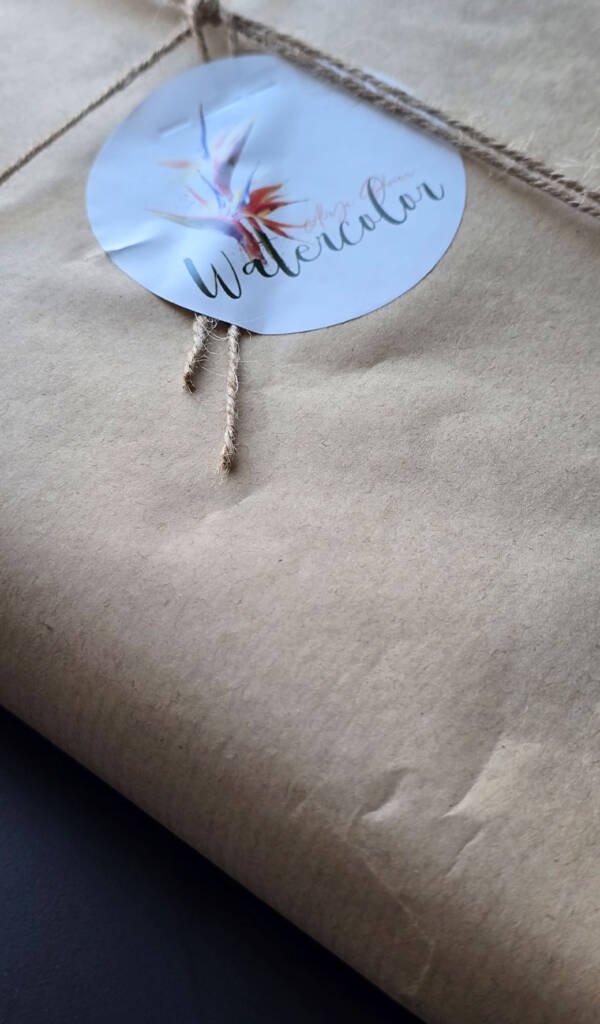
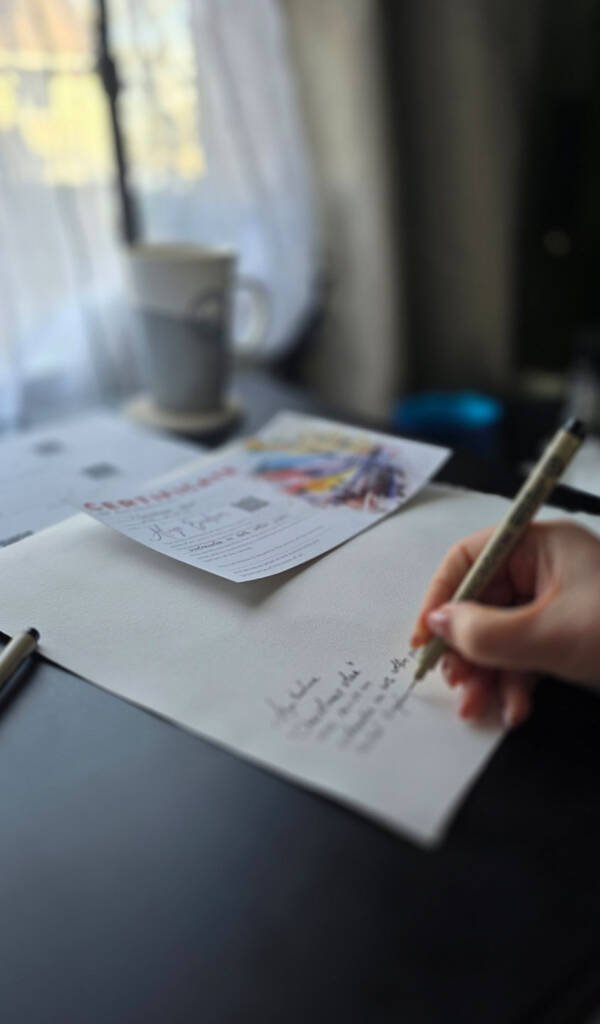
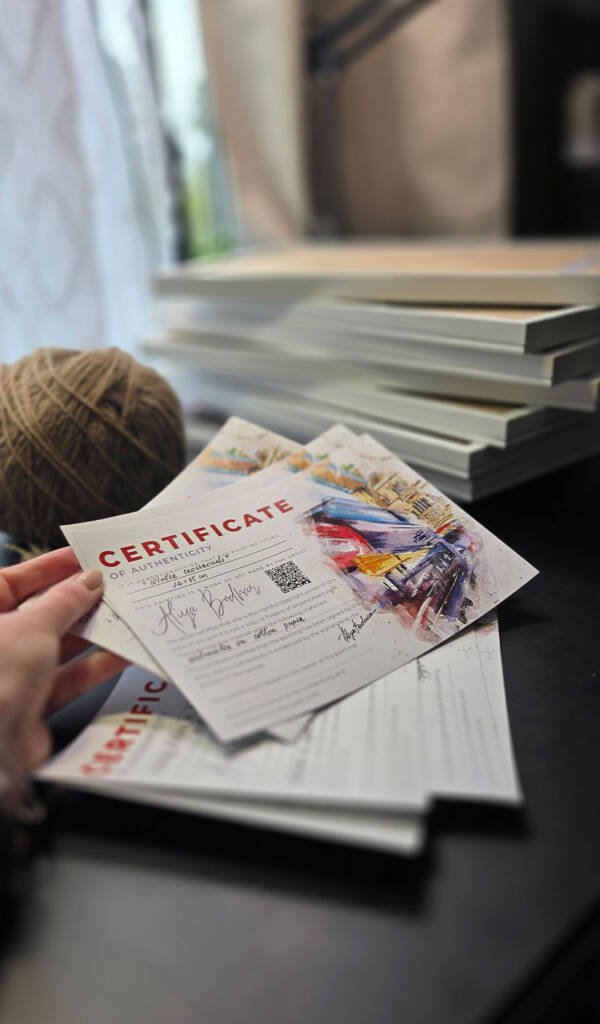
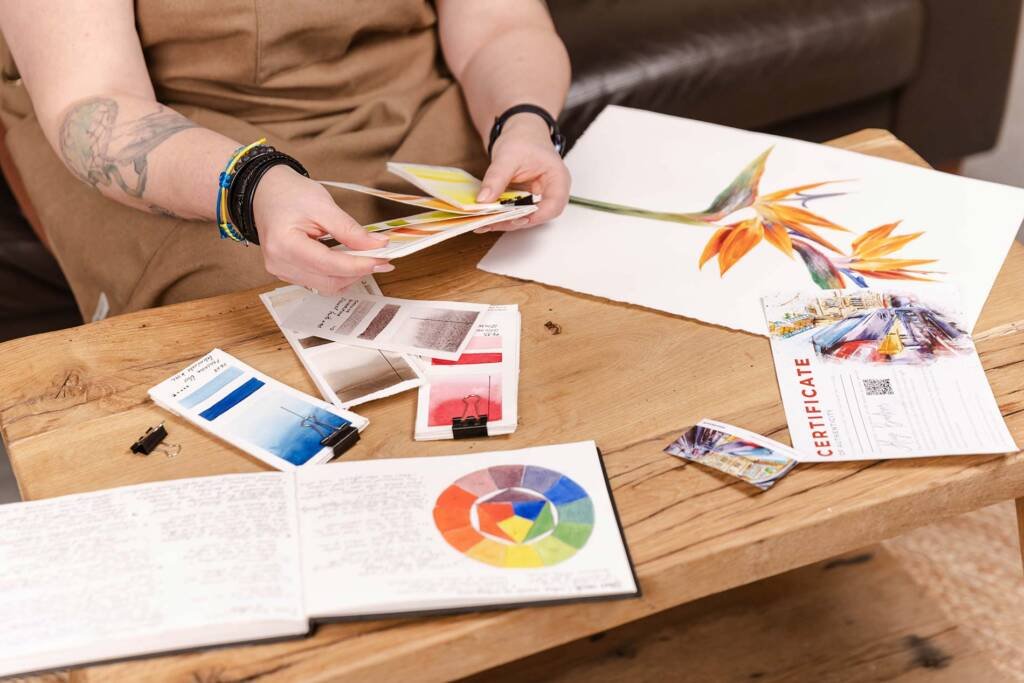
I keep records of my works and their status. I know which are available, sold, reserved or currently exhibited. Works leave with certificates of authenticity. Packaging is part of the collector’s experience. Prices need internal logic. Exhibition agreements need to be read.
You do not need sophisticated systems at the beginning. You need systems you will actually maintain. Professionalism is often much quieter than it looks from the outside.
Relationships change everything
There is one part of an artistic career that cannot be reverse engineered completely. People.
Some of the most meaningful developments in my own practice have come through conversations, communities and relationships rather than applications. This does not mean networking in the uncomfortable sense of entering a room and calculating who might be useful. It means participating.
Go to exhibitions. Speak to artists. Become part of your local creative community. Listen to curators talk about their work. Volunteer when something genuinely matters to you. Support other artists. Ask questions. Share knowledge. Let people encounter you repeatedly rather than introducing yourself only when you need something. Creative ecosystems are built from relationships long before they become opportunities.
Give your practice time to become itself
Perhaps this is the part I understand most differently now. At the beginning, it is tempting to make every decision serve the career. What should I paint because it will sell? What should my style be? Which platform should I use? How often should I post? How quickly should I find representation? But an artistic practice also needs periods when you do not know exactly where it is going.
My own work has changed as my questions have changed. Some ideas that once seemed central became less important. Others appeared quietly and eventually revealed that they had been present underneath the work for much longer than I realised.
That uncertainty is not necessarily a failure of strategy. Sometimes it is the research. A career needs enough structure to support the practice, but not so much structure that the practice can no longer surprise you. So when somebody asks me now, “How do I build a career in art?”, I cannot give them a ten step formula.
I can tell them to take their work seriously. To become curious about the world in which that work will live. To learn the professional language surrounding it. To understand money without allowing money to dictate every artistic decision. To seek opportunities with intention. To build relationships before they need them. To document what they do. To remain open to changing direction.
Most importantly, I would tell them not to confuse building a career with proving that they deserve to call themselves an artist. Those are different questions. Your practice develops in the studio. Your career develops through the relationships between that practice, other people and the wider world. Neither is ever completely finished.
Share this article :
INSPIRED POST
Building an artist career: beyond the canvas
01/04/2026

How I organised my first solo art exhibition
10/10/2025
Becoming visible: my solo art
09/23/2025
The flavour of belonging:
08/21/2025
From silence to Castalia…
08/08/2025