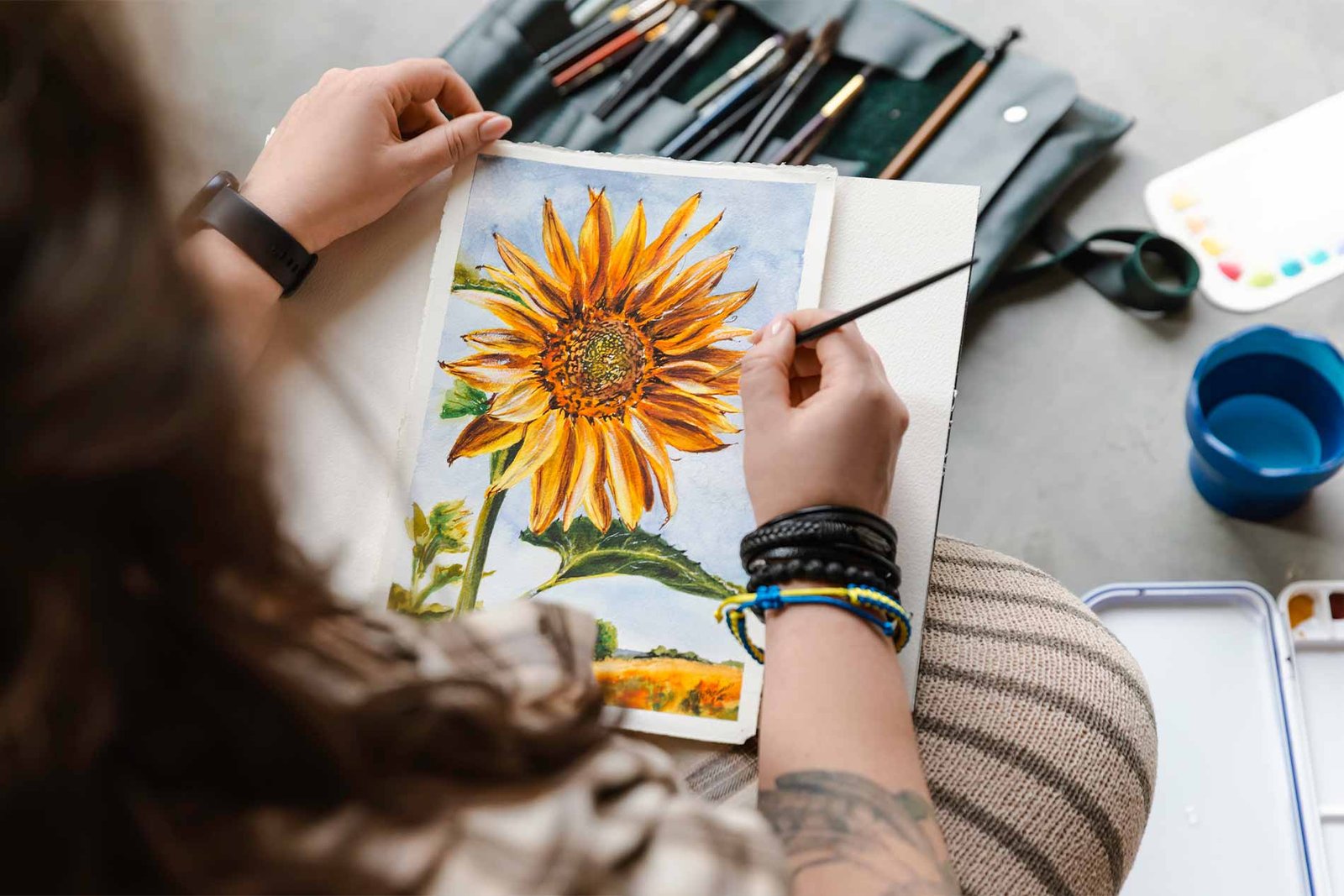
How I organised my first solo art exhibition
and why it inspired my guidebook “Exhibition Flow.”
There comes a moment in every creative journey when invisibility no longer feels like safety…just limitation. For a long time, I existed in the quiet. Painting. Sharing glimpses online. Sending works to group exhibitions. It wasn’t hiding, it was… almost enough. But not quite. Then something within me stirred, not as ambition, but as an inner pulse. A whisper that grew clearer each day: “It’s time to be fully seen.”
Not to prove myself. Not to chase results. But to let my art breathe in the open. To invite resonance, not recognition. That’s how “Heritage in Watercolour: Stories from Kent” came to life, not as a project, but as a conversation. Between me and the place I now call home. Between what I feel and what I create. Between artist and viewer, without noise. And now I invite you behind the scenes. Not into a “how-to” guide but into a living process of choosing visibility, working with time and energy, and trusting your rhythm. Maybe you’ve felt this inner shift too. If so…may this story be the gentle nudge you’ve been waiting for.
The first step: when the idea becomes a pulse
The decision to host my first solo exhibition didn’t arrive with fanfare. It came quietly a subtle, persistent rhythm beneath the surface of my daily life. For months, the idea simply followed me. It didn’t demand action. It didn’t push. But it also didn’t leave. I carried it like a soft hum in the background, waiting for the right moment to become music. At some point, I realised I was no longer wondering if I would do it… but how. Not in a spreadsheet or a checklist, but in my journal, through slow and spacious thoughts. I found myself asking:
- What do I truly want this exhibition to offer?
- Who do I hope will come and how do I want them to feel in the space
- What kind of presence do I want to hold, not only in the room, but in myself?
With each question, something started to shift. I began to sense the shape of the experience, not as a series of tasks, but as a story unfolding. And from that space…gently, gradually the structure began to form. I knew early on that I needed time. Not just to prepare the artworks or handle logistics, but to settle into the idea emotionally. To hold space for the nerves, the joy, the self-doubt. To allow my inner artist to catch up with the outer decision. I gave myself months. Not because I couldn’t do it faster, but because I didn’t want to rush something that deserved to grow in its own rhythm. This wasn’t a race. It was a conversation.
If you find yourself standing at the edge of a similar decision, feeling the quiet tug of something that wants to be seen, perhaps you’ll find something of yourself reflected in this story:  Becoming Visible: My Solo Art Exhibition
Finding the Right Space
Once the decision had settled in my heart, the next question quietly emerged…where would this story unfold? I began exploring local galleries, wandering through spaces both modern and traditional, looking not just for white walls, but for a feeling. I wasn’t searching for prestige or perfect lighting. I was searching for resonance, a place that could hold the same warmth and honesty that lived within my paintings.
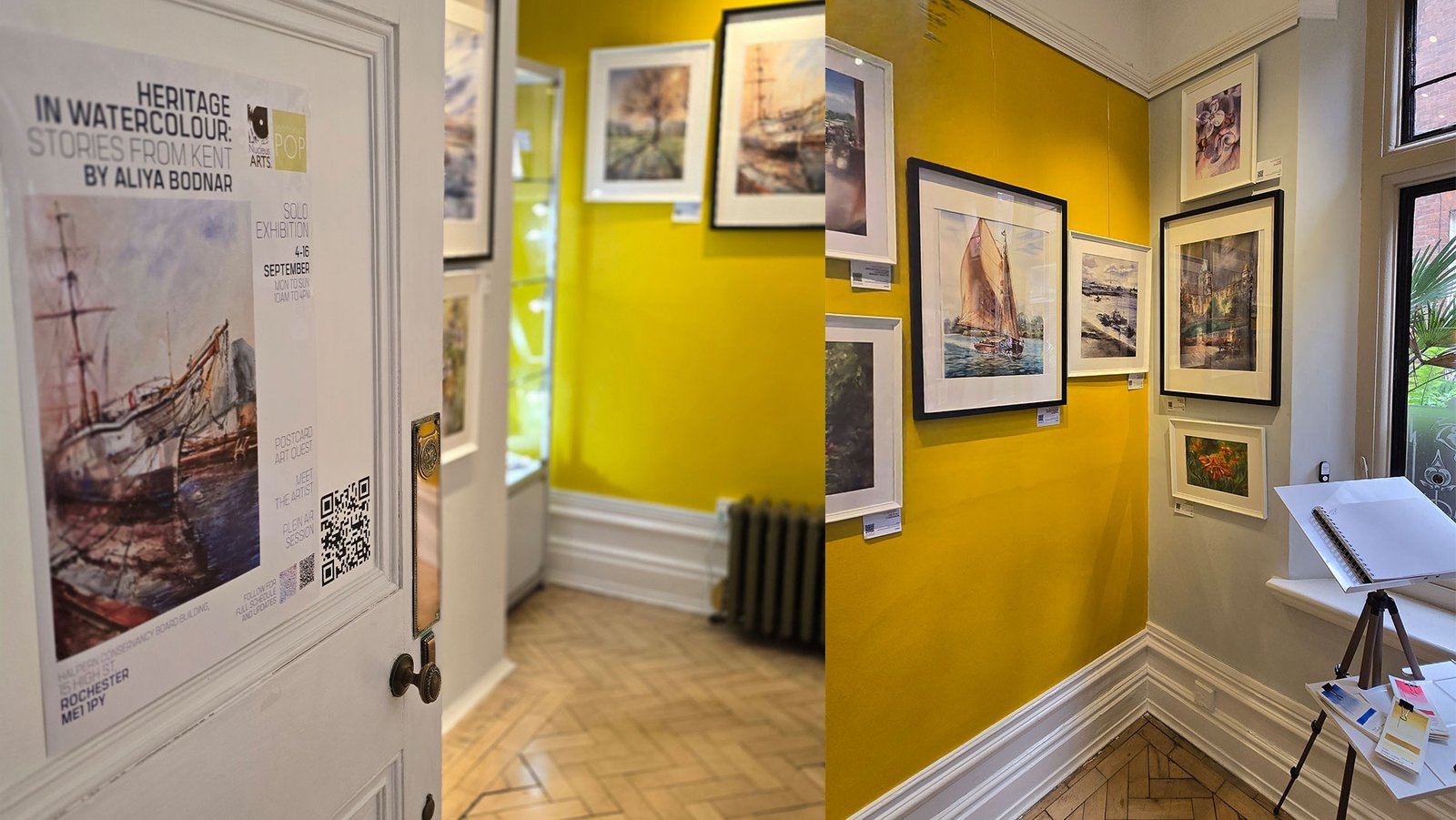
When I first stepped into the Halpern Gallery in Rochester, I knew. There was something about its energy… the quiet hum of history, the textured walls, the way light moved across them. It wasn’t a grand revelation, more like a gentle “yes” inside me. My art would feel at home here.
From there, I began to visualise how it might all come together. I requested the gallery’s floor plan, a simple act, but it grounded the dream into something real. With it, I could sense the rhythm of the space: which paintings would breathe beside each other, where the eye might rest, where a story could turn.
Instead of rushing into production or printing, I allowed myself to play with possibilities…arranging imaginary walls on paper, imagining the visitor’s slow walk from one work to the next. It became almost meditative: a choreography of emotion, colour, and silence.
And as I worked, something became clear, this was not about filling walls, but about creating a journey. A conversation between artworks, space, and the people who would eventually stand before them.
Budgeting with Care
here’s a moment in every creative project where the dream begins to take shape in numbers. It can feel confronting at first… calculating costs, weighing options, making choices that feel more logistical than emotional. But somewhere along the way, I realised: this isn’t about pressure. It’s about care. Rather than seeing budgeting as a burden, I began to treat it as a way of nurturing the exhibition into life. A kind of love language, where each line item was an act of devotion, not just to my art, but to the experience I wanted to create for others.
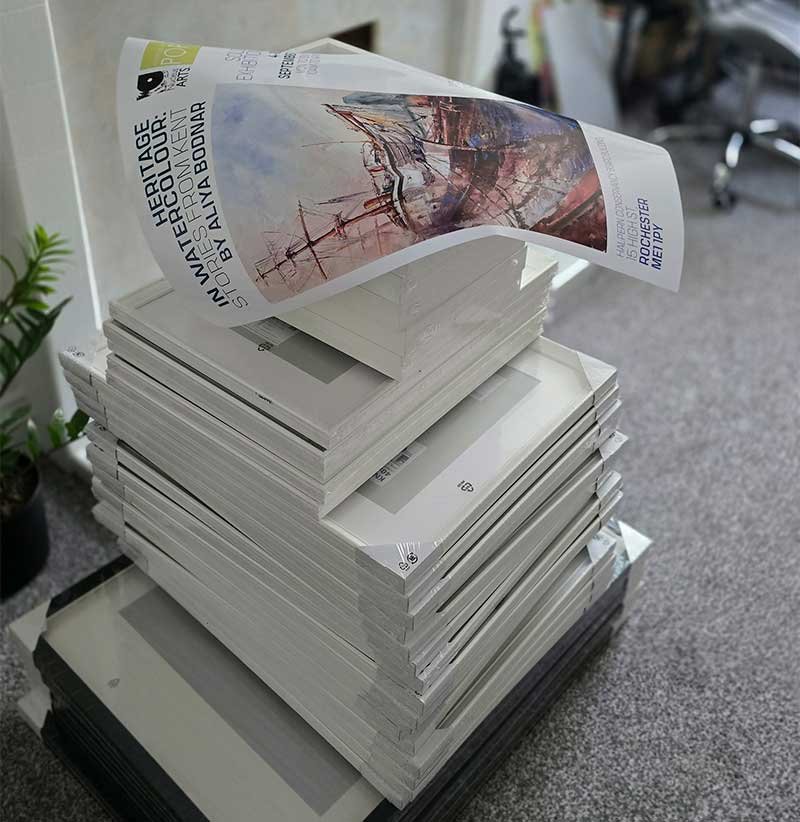
There was the gallery hire, of course…the foundation. Then came the frames, chosen not for extravagance, but for how they grounded and elevated the watercolours within them. Transportation needed planning, and marketing materials…posters, flyers, invitations, became small messengers carrying my vision out into the world.
There were the quiet details too: insurance for peace of mind, materials to package sold artworks with care, things that most visitors would never notice, but which I knew would make someone’s experience feel just a little more thoughtful.
I didn’t track every pound with anxiety. Instead, I imagined that each one held a little spark a vote of confidence in what I was building.
It wasn’t about spending. It was about preparing a space… emotionally, practically, spiritually, where something meaningful could happen.
Marketing without becoming a marketer
After almost twenty years of working in marketing, I think I have a much simpler relationship with it than I used to. Marketing is not something we add to our work after it is finished. At its best, it simply helps another person understand what we have made, why it exists, and perhaps find a reason to care about it.
For an artist, that does not mean turning yourself into a content machine, following every trend or learning to speak like a brand. Your paintings, your process, the way you think, the places you choose to show your work, the conversations around it, even the way someone encounters it for the first time are already part of that communication.
I think this is what years of working with businesses eventually taught me. There is no universal way to market something well. You first have to understand what it is, who it is for, and how people naturally come into contact with it. Only then do the tools make sense.
With art, I prefer invitation to pressure, curiosity to persuasion, and real connection to manufactured visibility. It is still marketing. Just without asking the artist to become someone else in order to do it.
Creating a multi-sensory experience
From the very beginning, I knew I didn’t want the exhibition to feel like a static gallery. I imagined something more alive…something that invited not just looking, but feeling. Not just observing, but wandering. Not just viewing art, but experiencing through it. So I began layering the exhibition like you would layer a painting, not for effect, but for depth.
One of the earliest ideas that came to me was to paint en plein air just outside the gallery. To be honest, it took courage. I had spent years working behind the scenes, and suddenly I was putting myself in full view, brush in hand, vulnerable to passing glances. But something in me knew this mattered. And as I sat opposite the gallery, sketching what I saw, something shifted.
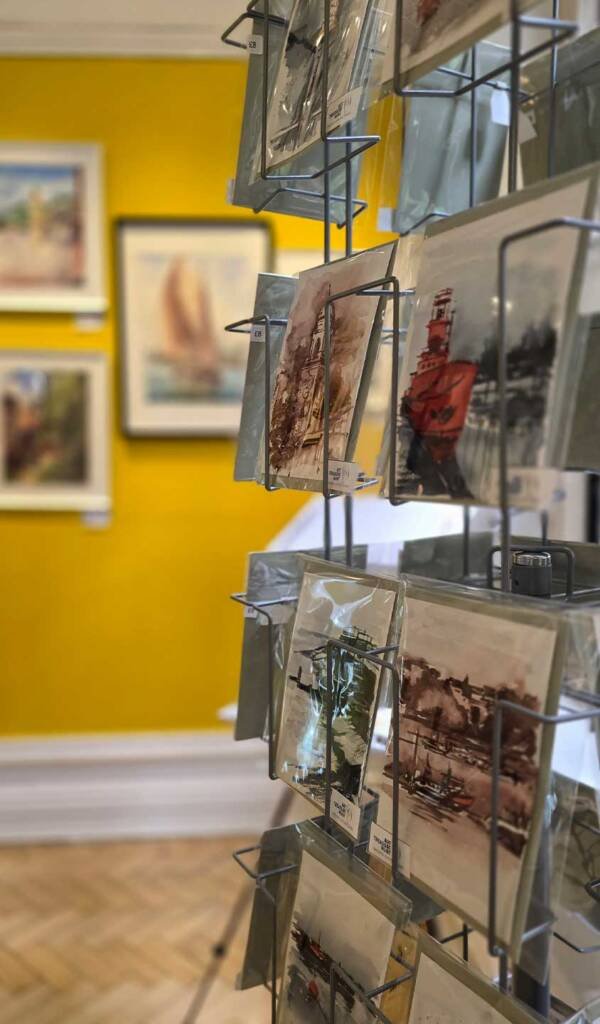
People slowed down. Some watched silently. One woman stood beside me without saying a word and I didn’t feel the need to break the stillness. We shared that quiet space together, and it became one of the most powerful, unscripted moments of the whole exhibition. Inside the gallery, I introduced something playful: a Treasure Hunt. But not a game for children…rather, a poetic invitation for everyone. I had created a series of original postcard-sized watercolours featuring local scenes and hidden corners of Kent. These weren’t just souvenirs…they were clues, fragments, echoes of the stories within the larger works. The gallery became a kind of starting point, a map. And for those who picked up a card, the journey continued beyond the walls…into memory, into curiosity, into the landscape itself.
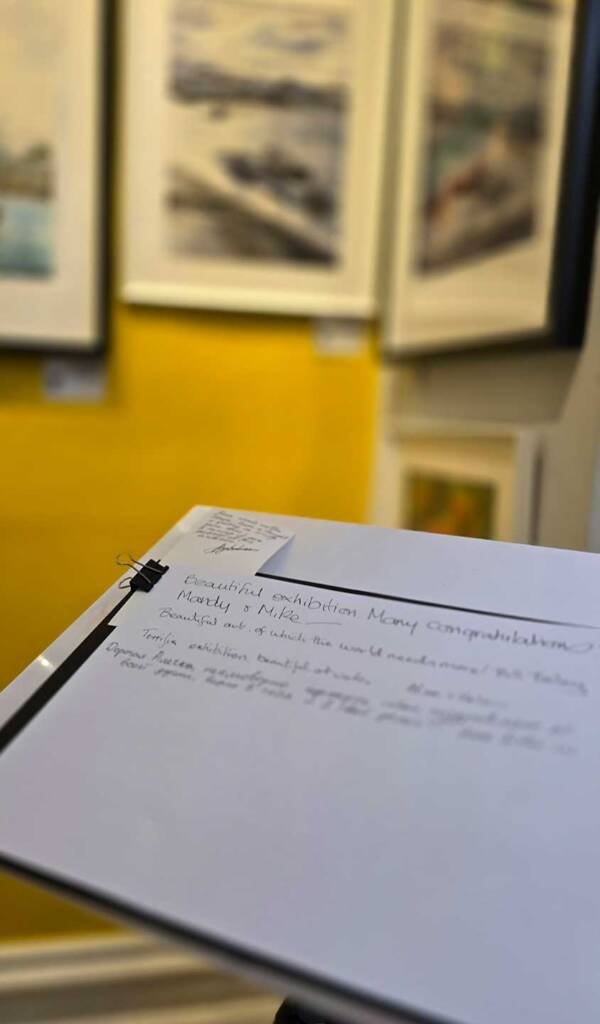
I also placed a Visitor Book on a small table near the entrance. It sat quietly, waiting. Some visitors passed it by. But others opened their hearts within its pages. There were notes of recognition: “This reminds me of my grandmother’s garden.” There were drawings from strangers, poems, names written in unfamiliar hands. It became a soft archive of presence…not just who came, but what they felt.
As for the opening…I skipped the formality. No champagne, no grand speeches. Instead, I opted for a gentle “Meet the Artist” format, where people knew when I’d be present and could choose to stop by if they wished. This created space for meaningful encounters. Some stayed briefly. Others returned again. It felt unforced, honest, human. In the end, what I learned was simple: people don’t always want to be dazzled. They want to feel welcome. And when we create moments of connection, even small ones… they remember. Because art isn’t just something we look at. It’s something that moves through us. And sometimes, a gallery isn’t the final destination. It’s just the beginning of the story.
The week before: holding space
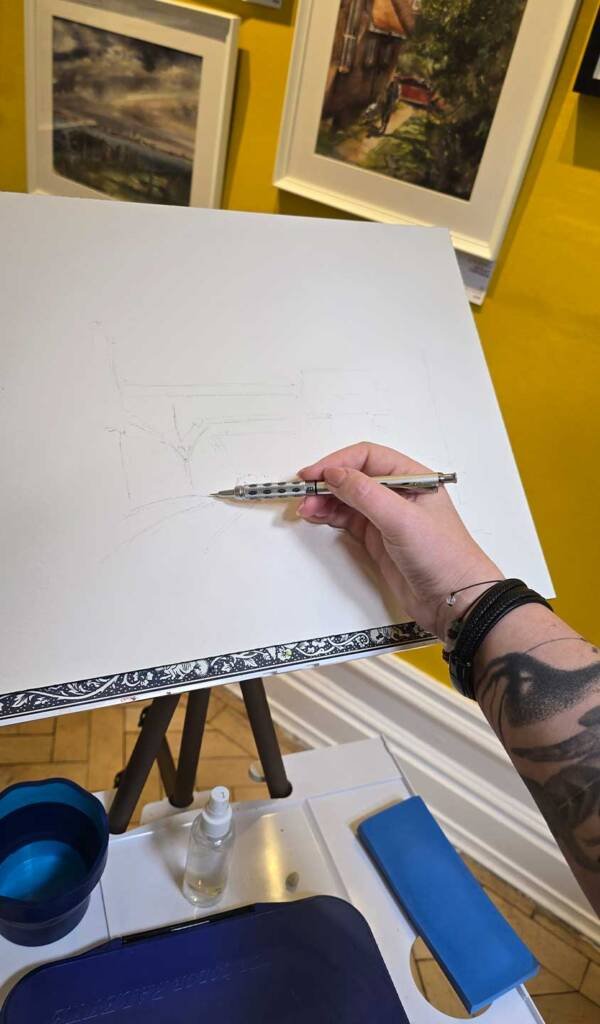
The final days before the opening felt like standing at the edge of something vast. There was excitement, yes… but also a quiet trembling inside. I spent that week adjusting details: checking texts, arranging and re-arranging paintings, making sure the space felt ready to hold everything I had poured into it. The gallery’s yellow walls glowed warmly, and I chose simple black frames to anchor the work…to give the colours room to breathe. But more than logistics, I focused on how I entered this moment. Not with tension, but with trust. I rested more. Wrote less. And reminded myself, gently:
You’ve already spoken through the paintings. Now let them speak for you.
The days of the exhibition: presence over perfection
Each day brought its own rhythm…some quiet, some filled with conversation. People paused, looked closely, asked gentle questions. One woman said my work helped her see familiar places with new eyes. Another stood silently as I painted outdoors, and in that silence, we simply shared a moment. A passerby, hearing my accent, asked where I was from. “Ukraine,” I said. “Slava Ukraine,” he replied softly. I wasn’t chasing outcomes. I was simply there.
And when I let go of expectations, something shifted…including the sales.
They came at the end, when I no longer held onto them. Because in truth, people don’t just buy art…they recognise themselves in it. And when that resonance is real, a painting finds its home.
After the show: integration
When the final frame came down and the gallery walls returned to stillness, something inside me quietened too. Not from emptiness, but from a sense that something meaningful had just been completed, and now needed space to settle. I took a breath. I didn’t rush to the next thing. I allowed the quiet to speak. Yes, I sat down and reviewed my finances, calmly and honestly. I noted the expenses, the sales, the small surprises along the way. I didn’t judge the numbers. I simply acknowledged them as part of the story.
Yes, I wrote thank-you messages…heartfelt and sincere. Because the support I received from friends, visitors, and even strangers was real and deeply moving. Yes, I opened the guest book and read through the words left behind…small notes, long reflections, spontaneous sketches. Some made me laugh. Some brought tears to my eyes. These were the unseen gifts of the exhibition.
But more than anything, I reflected. Not with a checklist in hand, but with honest questions:
- Who am I now, after this experience?
- What have I discovered… about myself, my art, my audience?
- What would I do differently next time…not out of regret, but from a place of deeper understanding?
And in that quiet moment, something stirred again. Not urgency. Not a new goal. Just a gentle, grounded yes. Yes… this journey is worth sharing. Not as a how-to. But as a living map. One that includes the hesitations, the delights, the unexpected turns and the inner growth that can’t be measured on paper.
From exhibition to guidebook: a living exchange
Some journeys ask to be written down…not because they’ve ended, but because they’ve become too full to hold alone. As I packed away the final painting and re-entered the rhythm of daily life, I realised something quietly profound: this exhibition had gifted me not only memories and moments, it had formed a complete arc of insight, experience, and gentle transformation. And so, I gathered everything…the reflections, the spreadsheets, the quiet courage, the soft marketing practices, the unexpected beauty of presence and poured it into a small, wholehearted offering:
“Exhibition flow: how to host an art show without burning out”
This is not a rigid formula. It’s not a blueprint for success in the traditional sense. It’s a companion for those of you who, like me, want to bring your work into the world without abandoning your sensitivity, your truth, or your joy. Rooted in my personal experience and my creative approach Flow, Cycles & Resonance, this guide includes:
- practical templates, timelines, and planning tips
- reflections to support your emotional readiness
- mindful marketing ideas that feel like sharing, not shouting
- ways to honour your cycles…so you don’t burn out before the lights go up
And above all, an invitation to trust your rhythm. Because visibility is not about noise. It’s about resonance. Because marketing isn’t manipulation… it’s meaningful connection. Because art is not a performance…it’s a dialogue.
📖 Want to learn more or get your copy?
This mini-book is available now for £15 a gentle energy exchange that helps support my ongoing work, and maybe offers you the clarity and encouragement you’ve been quietly hoping to find.
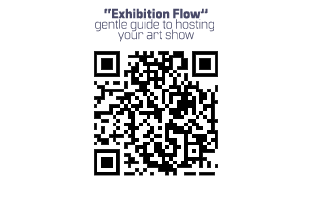
Scan to buy the book Exhibition Flow
And if this spoke to you…feel free to share it with someone else who might need it. These small ripples of support, visibility, and shared wisdom – that’s what true creative community feels like.
If you’ve read this far, thank you, truly. It means something in you recognises this path. Maybe you’re already walking it. Maybe you’re standing at the edge, wondering if it’s time. Organising a solo exhibition is not only about walls and dates and frames. It’s a quiet, beautiful shift in your inner world, a reclaiming of voice, vision, and presence. You don’t need to be louder.
You don’t need to do it like everyone else. You only need to begin…softly, bravely, in your own rhythm.
Let your art be seen. Let yourself be seen. Whether this article gave you a nudge, a roadmap, or simply the comfort of knowing it’s possible, I hope it stays with you as a kind companion on your own creative journey. Whatever shape your next step takes, may it feel like alignment, not pressure. Like unfolding, not performing. Like art. Like you.
With warmth,
Aliya
Share this article :
INSPIRED POST
Building an artist career: beyond the canvas
01/04/2026
How I organised my first solo art exhibition
10/10/2025
Becoming visible: my solo art
09/23/2025
The flavour of belonging:
08/21/2025
From silence to Castalia…
08/08/2025